Journal entryCardiff
Dragon 50 Training Recap - Injury Recovery 2026
A six-week durability-over-fitness rebuild back from a knee injury, ahead of an 80 km ultra - the fuelling plan, the kit list, and the pacing target for the Dragon 50.
A week-by-week log of a 12-week Pfitzinger block for the Generali Maratón Málaga, updated at the top each week.
My next race - and now my only marathon of the year - is the Generali Maratón Málaga, on the 8th November 2026. I started my block on 17th August, following Pfitzinger 12/70 with some mileage taken back out; two easy runs swapped for two hours a week on the bike. I've added five short strength and core sessions that weren't in the last block at all.
I expected week 3 to be a difficult one and it didn't disappoint. Fatigue tends to build around this point in a block and the legs go through an awkward period of adapting to it. It's definitely easier when you're expecting it.
After another rest day Monday - core and upper body only - Tuesday was 14km of general aerobic running, aka Zone 2. The plan adds hill sprints and strides to that one, and I did the sprints up Rhyd-y-Penau Road, which has a good gradient and wide pavements.
Wednesday was the tough day: 23km, and I wasn't feeling it at all. I struggled to pick the pace up towards the end and finished the run flat. Picking up some new Les Croupiers merch afterwards cheered me up, and I put the run down as a bad day rather than a warning sign.
Thursday and Friday were meant to be a double Zwift block. I did Thursday, then swapped Friday's ride for 12km of running - which is what the plan wanted in the first place, and it fitted my schedule better. It's impossible to follow any plan perfectly, and I'd rather stay flexible than force a session into a day that doesn't suit it.
I was away for the weekend and squeezed in a tourist parkrun at Haigh Woodland. Nice and easy, plenty to look at, and a big old hill. I'm still not great at running parkruns at recovery pace but I managed to hold myself to 25 minutes and 33rd place.
Sunday was the big one: 29km with 16km at marathon pace. I'll admit to being nervous after Wednesday, and I'd spent ten hours on the train over the previous three days, which has been an injury trigger for me before. The session went surprisingly well. I ran to heart rate and held 4:01min/km for the 16km after a 13km Zone 2 start. With the heat and some hills in there I reckon that translates to about bang on target, so a very successful session and exactly the test I wanted after week 2.
The trip away meant missing the Cardiff 10k, and I'm also away for the Swansea 10k and the Cardiff Half over the next few weeks. All three are on my list for next year - I'll be buying the Run4Wales bundles when they're released.
Week 2 built on the first week, with similar volume plus my first LT (lactate threshold) work in a good few months.
After a rest (core only) day Monday, the first run of the week was 19km in a classic Pfitzinger medium-long run involving laps of Heath Park, nice and comfortable. Wednesday and Thursday saw back to back bike sessions, with sub threshold efforts followed by an easy hour.
These replaced a 16km Zone 2 and a 10km Zone 1 run. With my legs feeling good, part of me wanted to add volume back in, but with the goal of this block ultimately to stay injury free I resisted the temptation.
Friday's 16km with 25 minutes of Zone 4 was a shock; I went along the Taff Trail and around Llandaff Fields, finding plenty of headwind. The LT segment ended up being 3:31min/km but at an average HR of 173bpm, so 4bpm into my Zone 4. I felt it too. A bit disappointing with the legs having felt great, but I did feel like the conditions made it harder than it should have been.
Saturday's Zone 1 recovery run involved a trip up to Aberfields parkrun. The first run I've done in a long time which was wet and a bit cold - refreshing!
The week wrapped up with my long run Sunday; 28.5km at 4:25min/km average. I ran around Lisvane, then up to Coryton Gyratory, down the Taff Trail to the castle, and then back up via Roath Park and Lisvane Reservoir. Perfect running weather and overall a lovely run. Legs felt great, my new Shokz kept me company (my previous pair have gone missing...) and I easily managed a trial 60g of carbs per hour including one of the 226ERS gels they'll be giving out on course at Malaga.
The strength training plan seems to be working so far and my legs feel great, so I'm putting Friday down to an off day. Next week is my third of four base weeks and more of the same. The biggest run of the week is 29km with 16km at marathon pace on Sunday which will be a good test - I'll be sticking to flat ground.
The block opened on the 17th with just shy of 70km of running planned that week. After a core only day, Tuesday's 14km Zone 2 with hill sprints and strides felt fine, before 19km around Roath Park and Heath Park on Wednesday. Pfitzinger prescribes long runs as starting in high Zone 2 and progressing to Zone 3, which will take some getting used to having done little tempo work in the last few months.
Thursday and Friday were my two bike sessions, including 3 x 10 minutes at sub threshold in the latter. This feels a good way to keep aerobic fitness while giving the legs a rest.
parkrun on Saturday saw me behave myself for once, with a recovery effort around Maesteg - and another South Wales parkrun done. Expect a write up article soon.
Finally, Sunday was the big day of the week; 26km with the second half at 3:55min/km, aka my target marathon pace. I took a route around Cyncoed and Rumney which is how you end up running a pace session on a hill. Cyncoed was too hilly to hold marathon pace; I finished nearly 10 seconds per kilometre down on target. Fuelling went well though, and I coped fine with 65 grams of carbs an hour. More on my fuelling plans next week.
The run told me about the route rather than my fitness, though a week in that's a generous reading. For every marathon pace session from here I'll be going to the Taff Trail and securing flatter ground.
For Boston at the start of this year I followed Advanced Marathoning's 12/55, which means 12 weeks at an approximate ceiling of 55 miles a week. This time I'm following 12/70 but with mileage removed until the weekly total sits closer to the 55 plan again. What I cut is easy volume; the harder speed sessions stayed.
The book carries four mileage tiers - up to 55, 55 to 70, 70 to 85 and more than 85 - each in an 18-week and a 12-week version, the shorthand naming the weeks and then the tier's ceiling.
The edition matters too: Running with Rock's comparison has my edition (the fourth) giving runs as a range rather than a fixed distance, prescribing threshold work by time, and allowing me more flexibility in my route planning.
I've taken two runs a week out - the zone 1 and some zone 2 easy days - and put in two one-hour rides instead, one easy and one hard. The reasoning is impact: at 82kg I'm heavy for the pace I'm chasing, and easy running made the most sense to cut.
The evidence doesn't settle it either way. Studies have previously shown that this can achieve less impact for no less of performance but the data is still limited.
The Boston block went very well until I injured my knee less than two weeks out. My physio put that down to a lack of glute and hip strength, so this block carries two dedicated strength sessions and three short core sessions a week. The workouts are all the usual ones you'd expect with some tailoring to target specific areas as needed.
I'm not publishing the sessions. They were prescribed for me by someone who looked at me, and a generic glute routine with their name near it would put words in their mouth.
A one-year study of 629 novice runners tied higher-than-normal peak eccentric hip abduction strength to lower risk of developing patellofemoral pain over the first 50 km. Last time an injury rearranged a block I wrote it up: the Dragon 50 miler.
As mentioned, week 1 was a swing and a miss when it comes to my marathon pace run thanks to poor route planning. Not a great surprise with how hilly Cardiff is and I've learnt my lesson with trying to do 250+ metres of elevation at a hard pace.
For the rest of the block I'll be utilising the bottom of the Taff Trail and the Barrage. From Hailey Park south (past Pontcanna Fields and Bute Park), there's a flat and quiet route all the way to the Bay and around the barrage. Cardiff Central gives me an easy to access start and/or end point via public transport. As an added bonus, there's plenty of opportunities to duck into shops for toilet stops or water stops if needed.
Cyncoed's route is one I've written about over in Lisvane. I'll keep doing my long runs at slower paces on hilly ground though; I think the extra leg strength it builds will help me through this block.
We'll see how this block goes. The goal is to qualify for Boston again, which by my reckoning means sub 2:53. However what I'd really like is sub 2:45 and to comfortably beat my PB.
Before entering Malaga, I checked that it was actually a Boston qualifier. The B.A.A. has the 2028 qualifying window opening on 19 September 2026, with the same target times as 2027, so a marathon run in November 2026 is a 2028 qualifier. Málaga is on the AIMS list, and the organisers are advertising this year's course as faster and flatter with fewer curves.
A six-week durability-over-fitness rebuild back from a knee injury, ahead of an 80 km ultra - the fuelling plan, the kit list, and the pacing target for the Dragon 50.
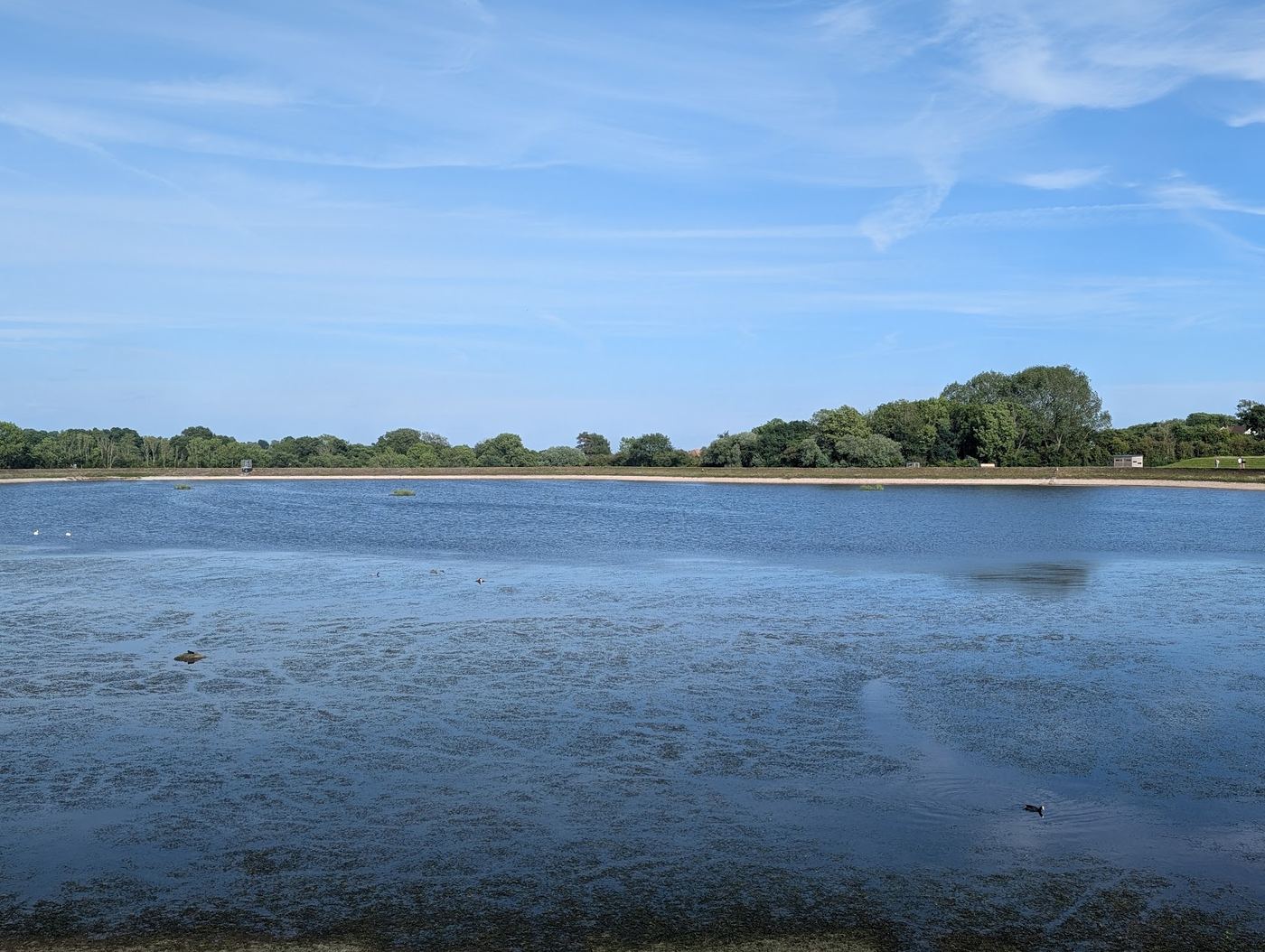
Five real running routes from Lisvane in north Cardiff - a flat reservoir loop, a hilly trail over Caerphilly Mountain, and the Taff Trail run into the city centre.

Cardiff parkrun is flat, fast and one of the ten biggest in the UK. Both courses, parking at Gabalfa Tesco, where to stand at the start and how to pace it.