GuideCardiff
Five Running Routes from Lisvane
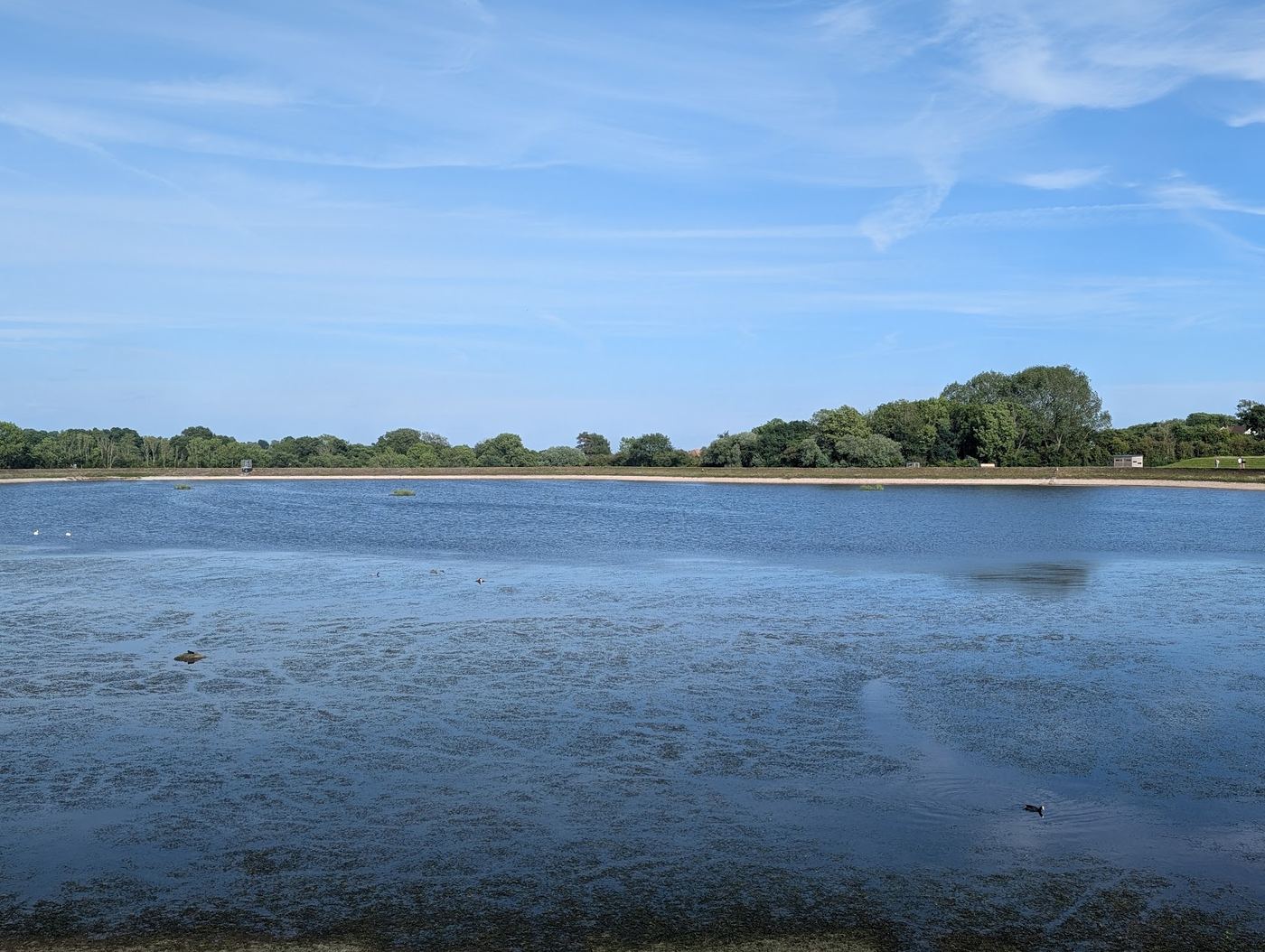
Five real running routes from Lisvane in north Cardiff - a flat reservoir loop, a hilly trail over Caerphilly Mountain, and the Taff Trail run into the city centre.
A six-week durability-over-fitness rebuild back from a knee injury, ahead of an 80 km ultra - the fuelling plan, the kit list, and the pacing target for the Dragon 50.
It's amazing how I peer into my last year of training through a pair of rose-tinted glasses. I quickly forgot how I spent most of July and August struggling to walk at times, let alone run. A lack of strength training combined with a huge increase in training volume unsurprisingly led to IT band and hip issues.
Four days before Ironman Wales I couldn't even complete an easy shakeout run. The adrenaline of the race luckily carried me through, but I knew something needed to be done. However, I still had another 70.3 in November, and then Boston was just four months away. I banked some rest and pushed on with my marathon block.
In the back of my mind, though, despite my legs holding up through 100 km weeks, I knew I wasn't doing enough injury prevention work. Or any injury prevention work at all. It was only a matter of time until the mileage caught up with me. My hope was that I could last through Boston and build up strength. Unfortunately for me, it was ten days before.
Injuries are always difficult to judge. This one started out as a minor knee twist - a little niggle, nothing major. Three days later, I couldn't bend my leg and was limping. In Boston, mobility was a real problem. Pain shot through my knee getting into bed, sitting down, getting into taxis - moving was difficult. It was obvious very early on in the trip that it would be a holiday and not a marathon.
Mentally, making that decision early made life easier. I expected it would recover fairly quickly, but after ten days - including spectating the marathon - it was no better and I was starting to worry. July and my planned 50 miler was frustratingly close, and recovery time was running out.
Thankfully, May saw the green shoots of improvement. A physio session confirmed the issue wasn't serious - while my knee was the source of pain, fundamentally the problem was weak glutes, hip flexors, calves and core. So plenty to work on, at least.
I started back run-walking: one minute on, two minutes off, progressing through the month to finish with a 14 km easy, pain-free run. I'd learnt my lesson, though. Mileage was taking a back seat to strength training - leg sessions five days a week, three long ones and two short, always taking priority over running.
I also added bike sessions back in. I'd struggled through Ironman training with the extra hip flexor fatigue, so I started with easy short sessions and worked on building up the volume.
This recovery block was a throwback to my Ironman training through injury: no tempo work, every run in Zone 2. By the middle of June I was feeling back towards full fitness, quicker than I'd expected, although there had been some ups and downs along the way. I'd had to pull out of a club relay, and while spectating, the urge to get back racing grew.
My next big question was: am I ultra ready? Mileage had increased from 18 km a week in May up to 60 km a week in June, but 50 miles on undulating off-road trails was a different question.
I thought the best approach would be a test weekend of low speed, high volume. If I couldn't run 60 km over two days, trying to do 80 km in one three weeks later would be stupid. Somewhat to my surprise, my physio agreed, so the plan was made.
I strapped on my vest for the first run: 43 km, taking in a parkrun and a 20 km course recce in the middle of a heatwave. My third-ever marathon-distance run. The bad points (overheating, running out of water, feeling faint on the packed train home) failed to outweigh the good points (I'd run a marathon, my knee was OK, the taste of cold water from a handily placed corner shop).
The next day I dragged myself out for 20 km. Splitting the run between a friend and then EZRC round the bay, constant chat kept my mind off my tired legs, but they coped better than I'd hoped. The ultra attempt was on.
The big realisation I had that weekend was that the ultra would be hard. I had seen it as a bit of a nice day out until then. My constant desire to push the pace and refusal to let the miles tick away meant even my test run was hard. I knew I needed to take it easier for the race if I was to get to the finish.
At the start of the year I'd entered both the Barry and Porthcawl 10 km races. Barry had taken a back seat to recovery - I ran/walked it as part of recovery - but Porthcawl now lined up nicely as one final effort before a two-week taper.
The one missing piece of the jigsaw was a pace target. With no tempo or speed work for nearly three months, I had no idea what was realistic. A few days before the race I headed up to the Cardiff Met track to run 4 x 1 km.
The benefits of the weeks of strength training were starting to show, and my legs were already well recovered from the weekend. Holding in the low 3:20s for the reps, I felt I had a reasonable shot at a 10 km PB on the weekend. And I was right, running 34:00 dead - read my race report here.
The main part of training I struggled with throughout the Ironman block was carb intake. Mastering fuelling requires discipline, organisation and a clear head on training runs.
My plans have a tendency to go out the window when I get tired. I failed to fuel for the last hour of the London Marathon and felt the effects. On long marathon-pace runs I have a tendency to close down my mind and forge on, ignoring my strategies.
This just wouldn't be possible in the ultra. I made a plan to rely heavily on SIS Beta Fuel bar chews. They're my go-to when cycling: easy to eat, 46 grams of carbs each, and easy to keep track of. I'd then top this up with sandwiches, sweets, Hi5 gels and some chocolate brioche buns, aiming for about 60 grams of carbs an hour. Lower than many, but something achievable for me.
As with all trail races, the Dragon 50 has a lengthy mandatory kit list. Unlike road races, where you're never more than a few metres from help, trail races require a level of self-sufficiency, just in case.
My starting point is my Salomon ADV Skin 12 vest. Comfortable and spacious, I was told it was the best out there when looking, and I've seen no reason to doubt that yet. Packed inside was the extensive kit - thermal base layer, first aid kit, foil blanket, whistle, waterproof jacket (it may be a heatwave, but we are in Wales), head torch, spare batteries, buff and emergency map.
On top of this was my water bladder and flask - the former empty, to be topped up at an aid station, the latter fuelled with Hi5 hydration mix, with more tablets to mix in later. Plus a stock of the SIS bars and Hi5 gels.
I made a couple of my own additions too: a spare pair of socks to change into after the sandy starting section, and two types of suncream for my ghost-like skin.
In the drop bag: a pair of road shoes as a just-in-case for the second half, more fuel (bars, gels and chocolate brioche), a bottle of Lucozade, another pair of socks and a spare top. More than needed, but I thought it better to have the option than to regret leaving it out.
It's hard to plan for a distance you've not done before. It's even harder to plan for a distance that's nearly twice your longest-ever run.
For that reason my plan was simple: lock in to a target pace for the first 50 km, and see how the legs were. After some long chats with Claude AI, I decided 5:30 min/km would be realistic - well in my Zone 1 on road, and hopefully very low in Zone 2 on the trails.
This would play out as roughly 7:20-ish moving time, working out as sub 8 hours with breaks, and the possibility of faster if I had fuel in the tank for the last third. Was that realistic? I had no idea, but I was looking forward to finding out.
Five real running routes from Lisvane in north Cardiff - a flat reservoir loop, a hilly trail over Caerphilly Mountain, and the Taff Trail run into the city centre.
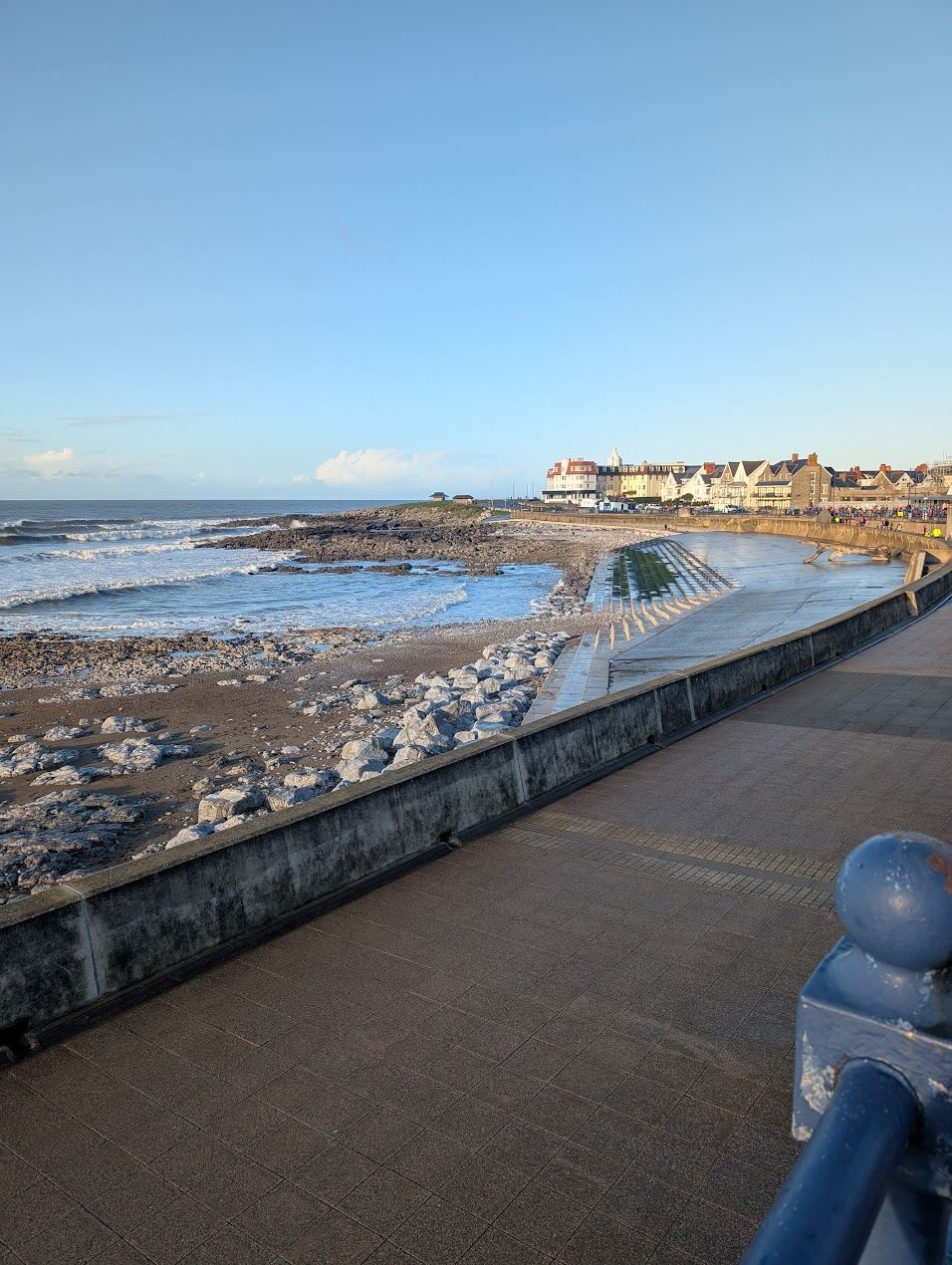
A first-person report from the Porthcawl 10k - the figure-of-eight course, the town-centre climb, the wind off the bay, and a 34:00 PB three weeks before an ultra.
Cardiff parkrun is flat, fast and one of the ten biggest in the UK. Both courses, parking at Gabalfa Tesco, where to stand at the start and how to pace it.